
One of me, a team of agents, and bad wifi
As I write this, 24 AI agent sessions are open on my laptop. What they got done in 30 days, how the work is organised, who checks it, the objections developers will raise, and what happens when the connection drops.
November 15, 20266 min readMichael Fellner
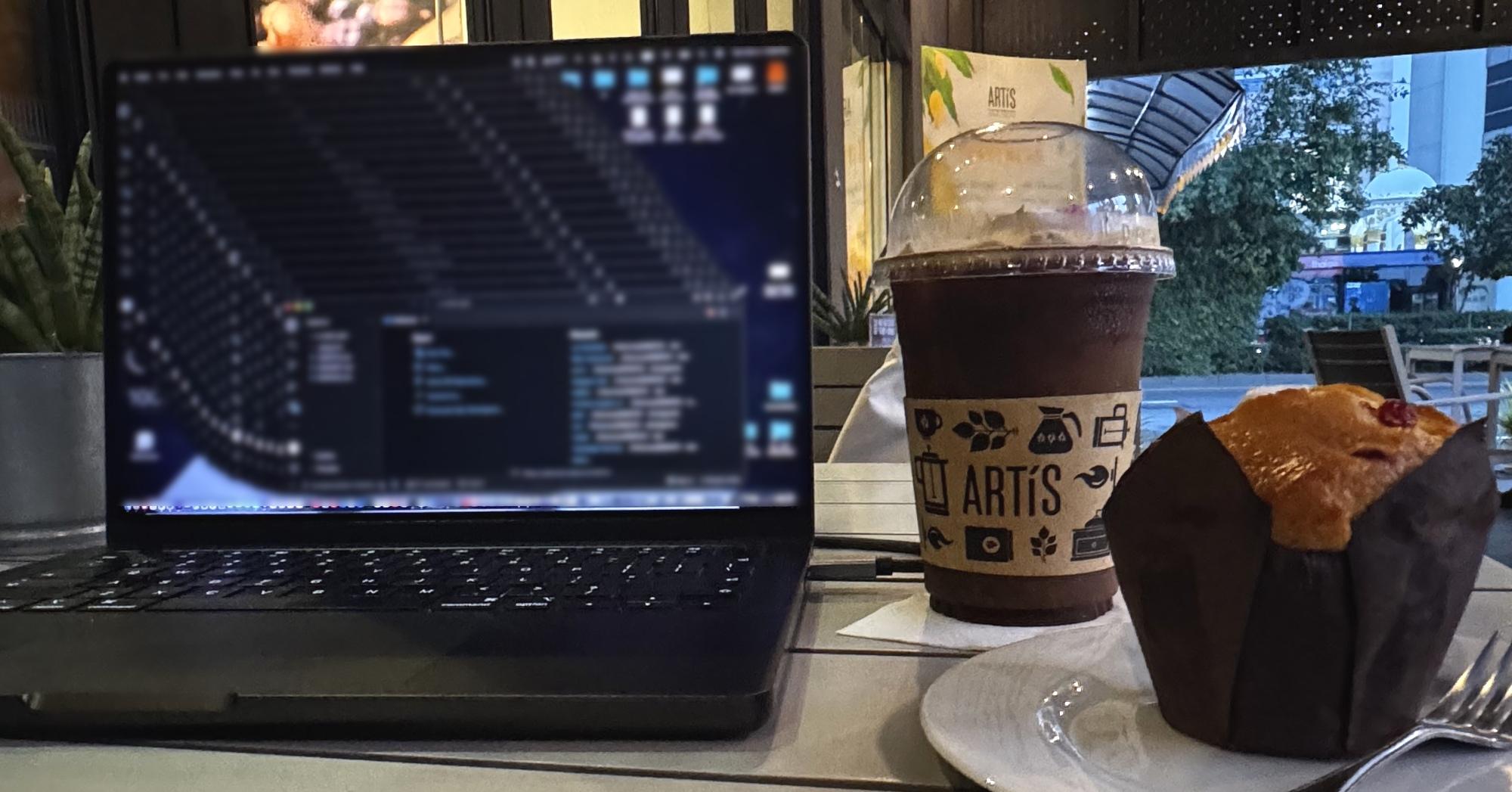
As I write this, there are 24 AI agent sessions open on my laptop. Some write, some research, some build apps, one plans my travel. There's one of me, and most days I'm working from a coffee shop.
This one runs long, and parts of it are for the developers. I'll get to the objections they're already typing.
What got done in 30 days
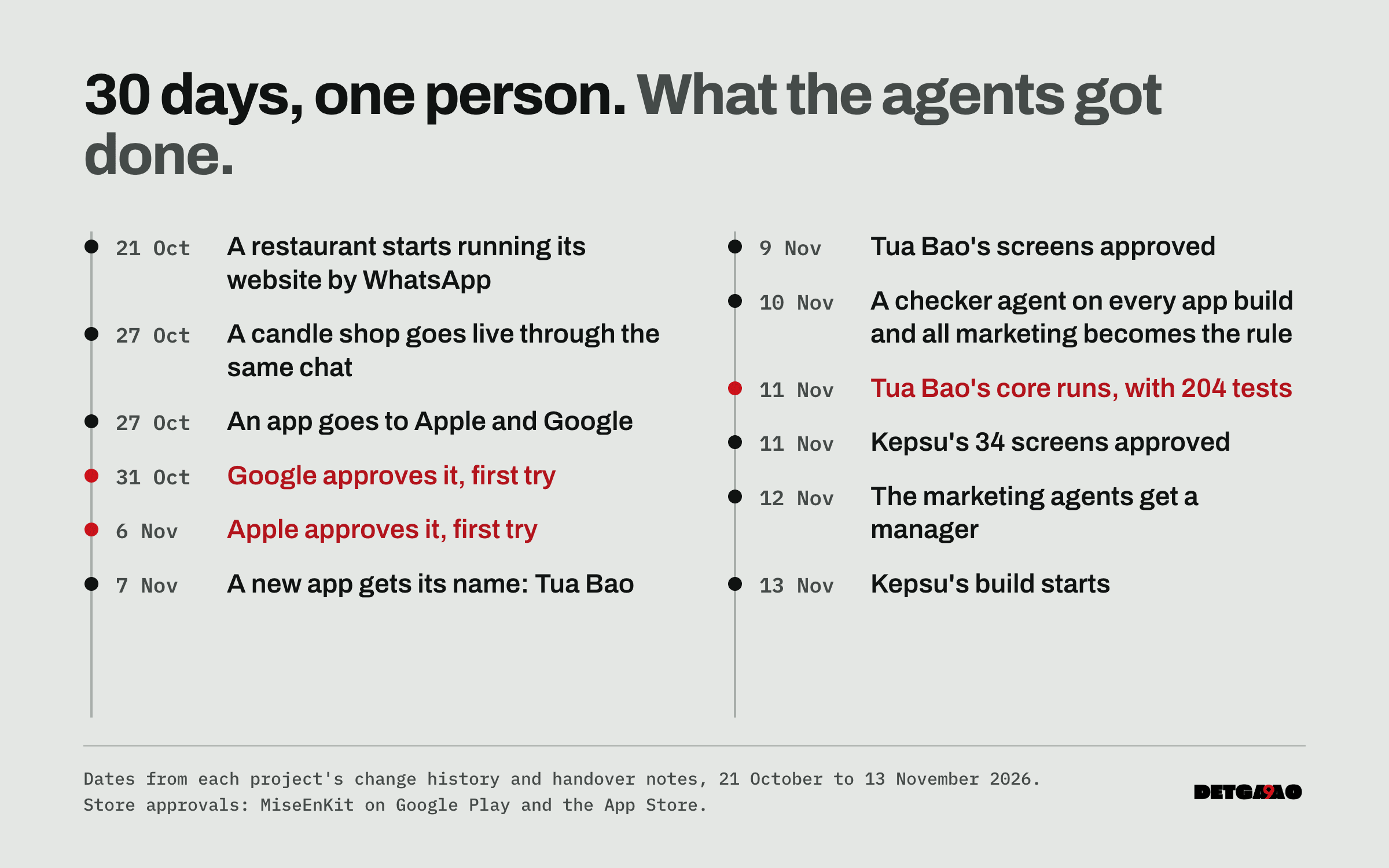
A weight-tracking app, from a name to a working core in five days. It's called Tua Bao, Thai for "a light body". Before the plan was written, agents read 7,591 public store reviews of nine tracking apps to find out what people complain about. The first screen board went up the next day. At version four, I said yes. Two days after that, the core was running as an iPhone app in the simulator, with 204 automated tests.
An app approved on the first try. MiseEnKit went to Apple and Google on the same day. Google approved it four days later, Apple ten.
Kepsu, my footage tool, from a name to building in six days, with 34 screens drawn and approved on the way, and a build plan that lists the 20 outside approvals (app stores, Google, privacy) before anything else.
My sister's restaurant runs its own website by WhatsApp. I wrote about the restaurant that stopped using its login. In the first 20 days my sister sent 32 requests, and every one was answered.
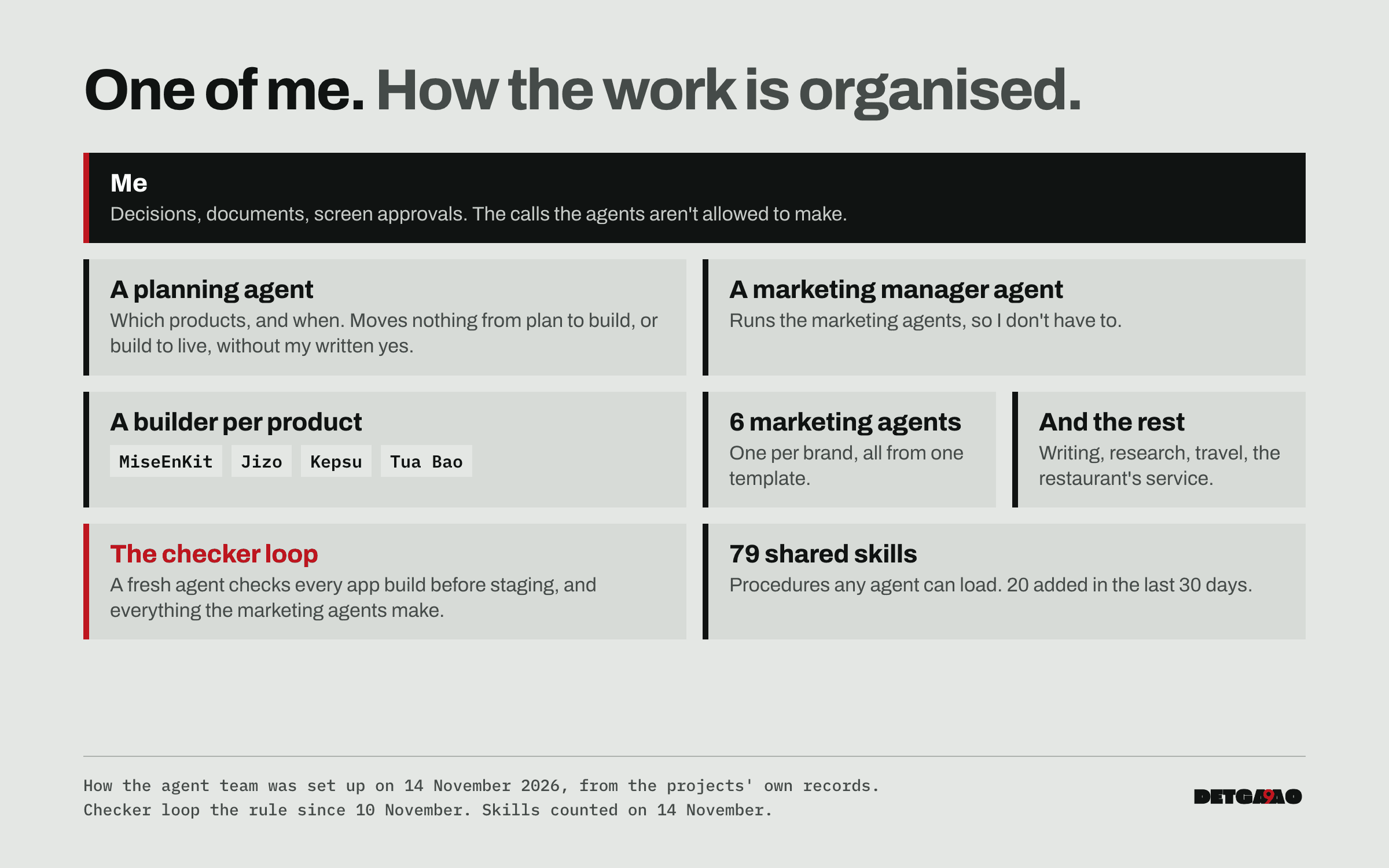
A marketing team made from one template. Six marketing agents, one per brand, all started from the same empty template, with the tools and no opinions. And I gave them a manager agent, so I don't have to be their manager.
What my job turned into
I don't write the code. My month was documents, screen drawings and decisions.
Every new product gets its documents before any code: what it is, who it's for, how it's built, what it costs, how it launches. Every new app gets a screen board, each screen drawn at phone size in the order a user meets them. Nothing on it gets built until I've said yes.
Above the builders sits one agent I plan with: which products to build, and when. It won't move a product from plan to build, or from build to live, without my written yes. Every decision goes into a file with my words and the date, so no agent has to guess what I meant. That was 52 decisions this month.
The way I want things done gets written down as skills, procedures any agent can load. 20 new shared ones this month, 11 of them our own: the screen board, the checker loop, app store submission, costing a product. I've written before about the instructions I had to give twice. Writing a rule down once beats giving it twice.
Who checks the work
The first objection I'd raise: AI writes confident nonsense, so who checks it?
Since 10 November, every product build before it reaches staging (a near-copy of the live app, with its own test data), and everything the marketing agents make, goes through a loop. One agent makes the work. A fresh agent that never saw the making checks it against the brief and my rules. A second AI from a different company gives its own opinion in the first round. The maker fixes, and it goes round again. It stops when a round finds nothing serious, or after three rounds, when what's left comes to me.
A blog article took three rounds this month: three serious problems, then two, then a pass. One app module raised 15 findings over three rounds before it went live.
The other objections
"Commit counts are a vanity metric." Agreed. My projects saved 1,106 changes last week (commits, for the developers), and that tells you how busy the agents were, not whether any of it was worth doing. I'd rather count what shipped.
"Drawing every screen first is just waterfall." A bit, yes. But Tua Bao's board took two days, and I'd rather argue with a drawing than with a built app.
"One person can't run this many projects." Not the way one person runs one project. Each product has its own builder agent, and each brand its own marketing agent. I make the calls they're not allowed to make, 52 of them this month.
"No pull requests?" None merged on the DETGAAO GitHub account in the last 30 days. Work goes to the main branch only after the automated checks and staging pass. Since 10 November, the review is the checker loop above.
"Most of that isn't live yet." True. One app is in the stores. The two newest are months away. Building is the part that got fast. Store reviews and outside approvals didn't, which is why Kepsu's plan puts them first.
From a bad connection
I did all of this while travelling, and the connection isn't always great. One day in November it measured about 0.2 megabits per second down (yes, point two), and code still went through tests and staging to live. A screen board upload timed out four times that day, until I switched to my phone's hotspot, which then kept dropping too. Agents don't send much data, so they kept going, just slower. We did make one rule out of it: no release and no payment step on a connection that keeps stalling.
The weak spot is the laptop. The agents run on it, so when it's closed, they stop. Next, the agent team moves off my laptop onto a dedicated always-on machine, so the work keeps running around the clock whether my laptop is open or not.
So that's the month
This is how I run DETGAAO now, and it's what we now offer other businesses: a team of agents shaped around how the business already works, with the owner making the calls.
If you run agents like this and you've found a better check than a second agent, or a good reason the main branch should scare me more than it does, I'd like to hear it.
Frequently asked questions
- Can one person run several software products with AI agents?
- Michael Fellner does. In the 30 days to 14 November 2026 his agents got one app approved by Apple and Google on the first submission, took a new weight-tracking app from a name to a working core with 204 automated tests in five days, and took a footage tool from a name to building in six. Each product has its own builder agent. He makes the decisions they are not allowed to make, 52 of them that month.
- What is a maker-checker loop for AI agents?
- One agent makes the work. A fresh agent that never saw the making checks it against the brief and the rules, a second AI from a different company gives its own opinion in the first round, and the maker fixes. It repeats until a round finds nothing serious, or stops after three rounds and hands what is left to a person.
- Are commit counts a good measure of AI agent productivity?
- Not on their own. A count of saved changes shows how busy the agents were, not whether the work was worth doing. Counting what shipped, such as store approvals and features live, says more.
- Do AI agents keep working on a bad internet connection?
- Mostly yes. Agents send little data, so a slow connection slows them down rather than stopping them. On one day in November 2026, on about 0.2 megabits per second down, code still went through tests and staging to live. What stops them is the computer they run on being switched off.
- How does a business get its own team of AI agents?
- Start from how the business already works, map it, then build the agents around it, with the owner making the calls. DETGAAO runs its own company on this setup every day and offers the same to other businesses.
Signal, by email
One email when there is a new piece. No sequence, no digest, no drip campaign.
Prefer a reader? Signal has an RSS feed
Google lets you choose which sources it shows you more of. Mark DETGAAO as a preferred source and Signal moves up in your search results, not everyone's.
Add as preferred sourceOne click, and reversible in your Google settings.
Want help thinking through what this changes for your marketing operations?
Start a conversation